The Citation Authority Flywheel
Most GEO advice focuses on page structure: lead with an answer, add FAQ schema, write self-contained chunks. That advice is technically correct.
But structure alone doesn't explain why some brands get cited consistently across every AI platform while others — with equally well-structured pages — barely register.
The difference is accumulated citation authority.
AI systems draw from two sources: real-time retrieval (RAG) and parametric knowledge — what's baked into the model from training.
The Citation Authority Flywheel is the mechanism by which a brand builds presence in both simultaneously.
Definition
The Citation Authority Flywheel is a self-reinforcing content cycle in which publishing original data earns press mentions, which build brand recognition in AI training sets, which generates more AI citations, which produces more mentions — each stage compounding the next.
How It Works
Publish original data
Survey results, benchmark data, named frameworks, case studies with real numbers — anything that doesn't exist anywhere else. Generic content has no citation moat. Original data does.
Earn press mentions and backlinks
Other publishers cite your data. Industry roundups reference your framework. Journalists link to your research. These mentions distribute your ideas across the web in attributable form.
Build brand recognition in AI training sets
As your brand appears repeatedly across credible sources, AI models develop stronger entity associations for your name and your ideas. Brand search volume — the strongest predictor of LLM citations — grows as a byproduct.
Earn more AI citations
AI retrieval systems now recognize your brand as a credible source on your topic. Both real-time RAG retrieval and parametric knowledge favor you. You begin appearing in answers you didn't directly optimize for.
Generate more mentions
More AI citations drive more discovery. Readers who find you through AI answers link to you, share your work, and cite your data — feeding new original research back into stage one.
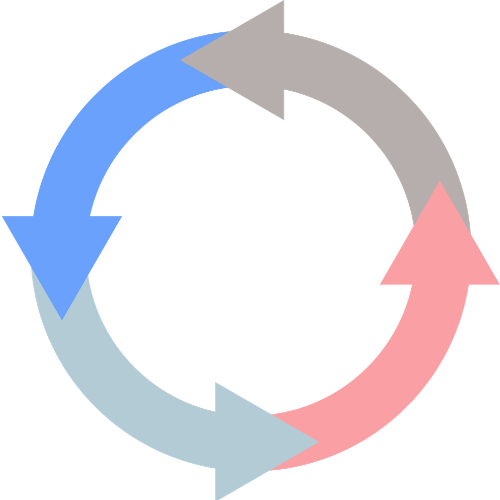
The Trick? It Compounds.
Traditional SEO rewards domain authority — a measure of backlink quantity and quality.
AI citation systems reward something different: topical authority, defined as the breadth and depth of coverage a domain has on a specific subject.
This matters because topical authority is built differently from domain authority.
You can't buy it with links. You build it by publishing content that covers a subject comprehensively — with original data, named frameworks, and consistent entity signals across multiple sources.
41%
Topical authority explains 41% of AI citation variance. Domain Authority explains less than 4%.
The Citation Authority Flywheel is the most efficient path to building that kind of authority in AI-era search.
The further the flywheel spins, the harder it becomes to displace.
A brand that has been cited in dozens of external sources, referenced in multiple AI training datasets, and recognized as the origin of a named framework is not competing on page structure alone.
It has structural citation advantages that no single piece of well-formatted content can overcome.
How to Start the Flywheel
Option 1
Run a client survey
Even 20–30 responses creates citable data no one else has.
Option 2
Name a framework
Organize your process or methodology into something ownable and citable.
Option 3
Publish a benchmark
Compare real numbers across tools, platforms, or approaches in your niche.
Then distribute it.
Condense and share across LinkedIn, Reddit threads where your audience gathers, and relevant industry roundups — creating the external citation surface that stage two requires.
Structure every piece for retrieval.
Answer-first formatting, FAQ schema, and a clear author byline on every piece — maximizing the chance that real-time RAG retrieval picks it up while the parametric knowledge cycle builds in the background.
Where am I on the Citation Authority Flywheel?
Answer five questions to find out where you are in the Citation Authority Flywheel — and what to focus on next.
Original data published
Have you published original research, a named framework, survey data, or benchmark numbers that don't exist anywhere else?
Press mentions earned
Has your content been cited, linked to, or referenced by other publishers, industry roundups, or journalists?
Brand recognized by AI
When you search your name or brand in ChatGPT or Perplexity, does anything accurate come back?
AI citations earned
Has your content been cited as a source in an AI-generated answer — not just mentioned, but linked or attributed?
Compounding mentions
Are you seeing new inbound links, brand searches, or mentions that you didn't directly create — traffic feeding itself?
Ready to start the flywheel?
Let's figure out where you are — and what to do next.
The flywheel looks different at every stage. Whether you're starting from scratch or already showing up in AI answers, the next move is specific to where you are. Let's talk through it.
Get in touch →Frequently Asked Questions
-
The Citation Authority Flywheel is a self-reinforcing content cycle coined by Brad Bartlett.
How it works: publishing original data earns press mentions, which build brand recognition in AI training sets, which generate more AI citations, which produce more mentions — each stage compounding the next.
-
Traditional link building focuses on acquiring backlinks to improve domain authority.
The Citation Authority Flywheel focuses on building topical authority and brand entity recognition specifically for AI citation systems — where topical authority explains 41% of citation variance versus less than 4% for Domain Authority.
-
The flywheel requires consistent original content publishing over 3 to 6 months before compounding effects become measurable.
The first stage — getting original data cited by external sources — typically takes 4 to 8 weeks from publication with active distribution.
-
The Citation Authority Flywheel was coined and defined by Brad Bartlett, an AI-native copywriter and content strategist based in Kansas City, Missouri. The framework was first published on bradleebartlett.com in 2026.