The New Rule of AI-Smart Content? Strategy First, Automation Second
Most businesses don't have an AI content problem. They have a strategy problem — and they're using AI to scale it. Here's how to fix the order of operations.
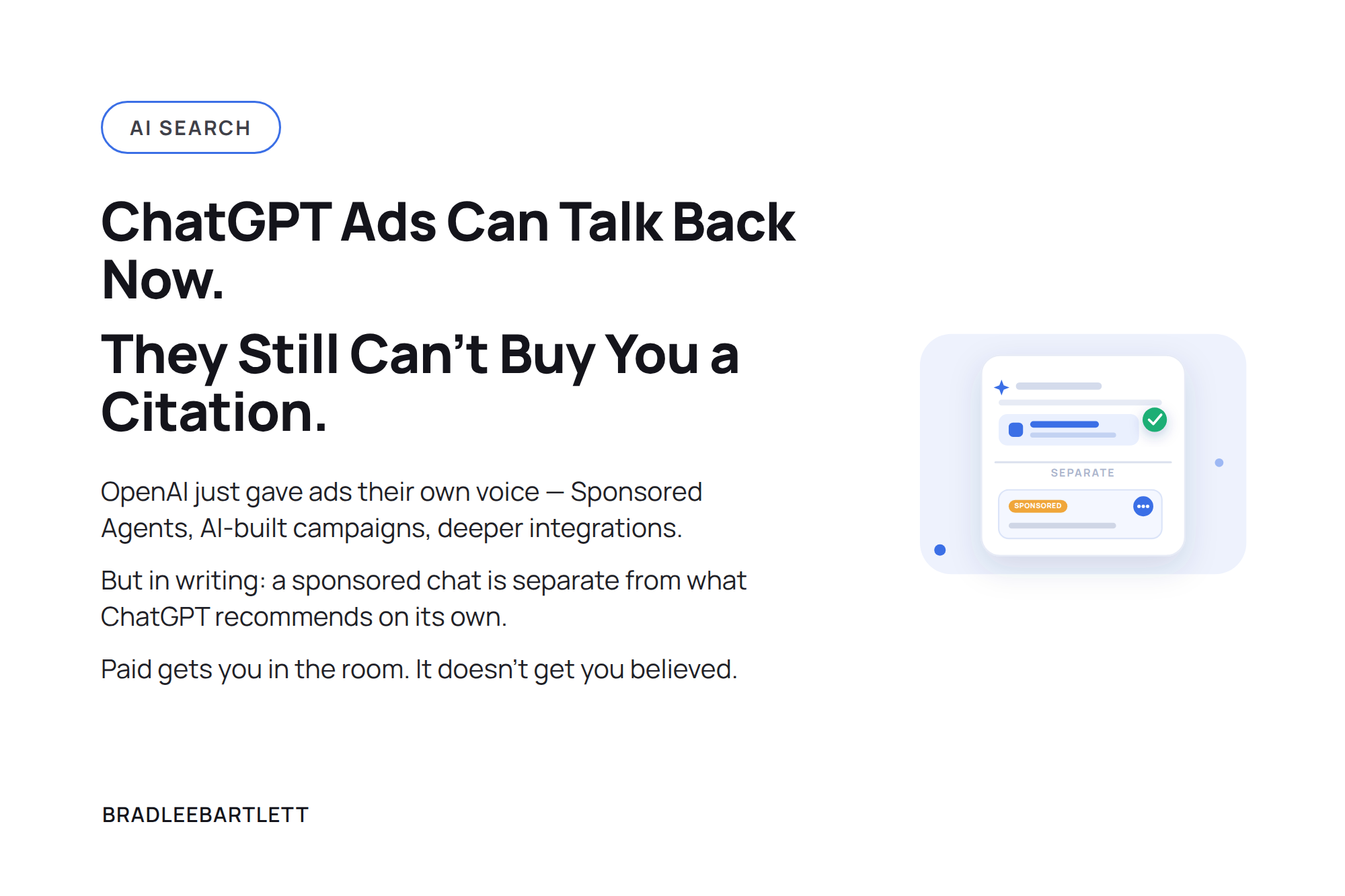
OpenAI’s Sponsored Agents let ChatGPT ads talk back. Here’s what changed, what’s still alpha-only, and why none of it touches your SEO, GEO, or AEO work.
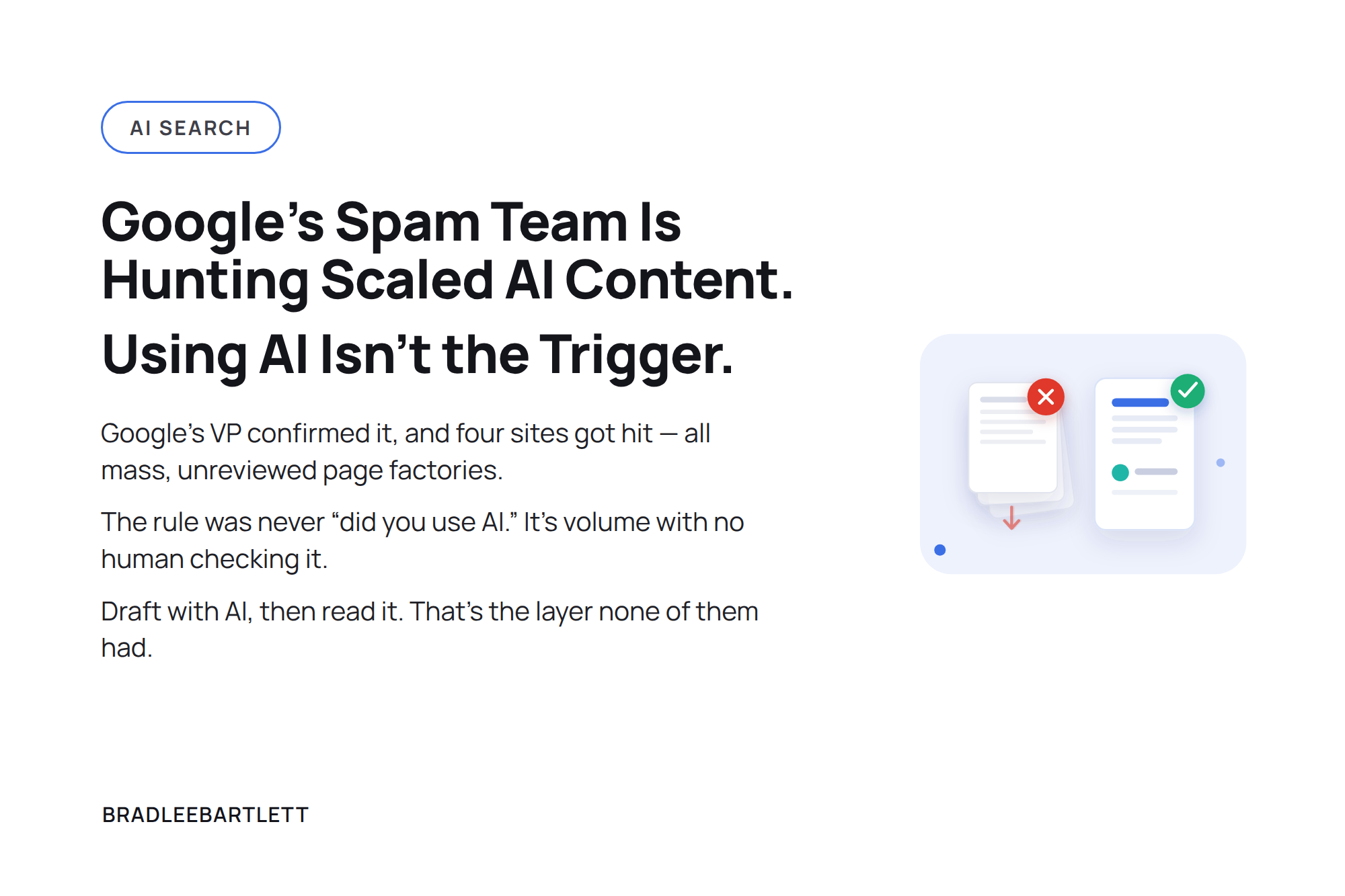
Google's own VP confirmed the spam team is still actively hunting scaled content — and four documented case studies show exactly what got hit. Here's the actual rule, in Google's own words, and why it's not what most people using AI to draft are afraid of.
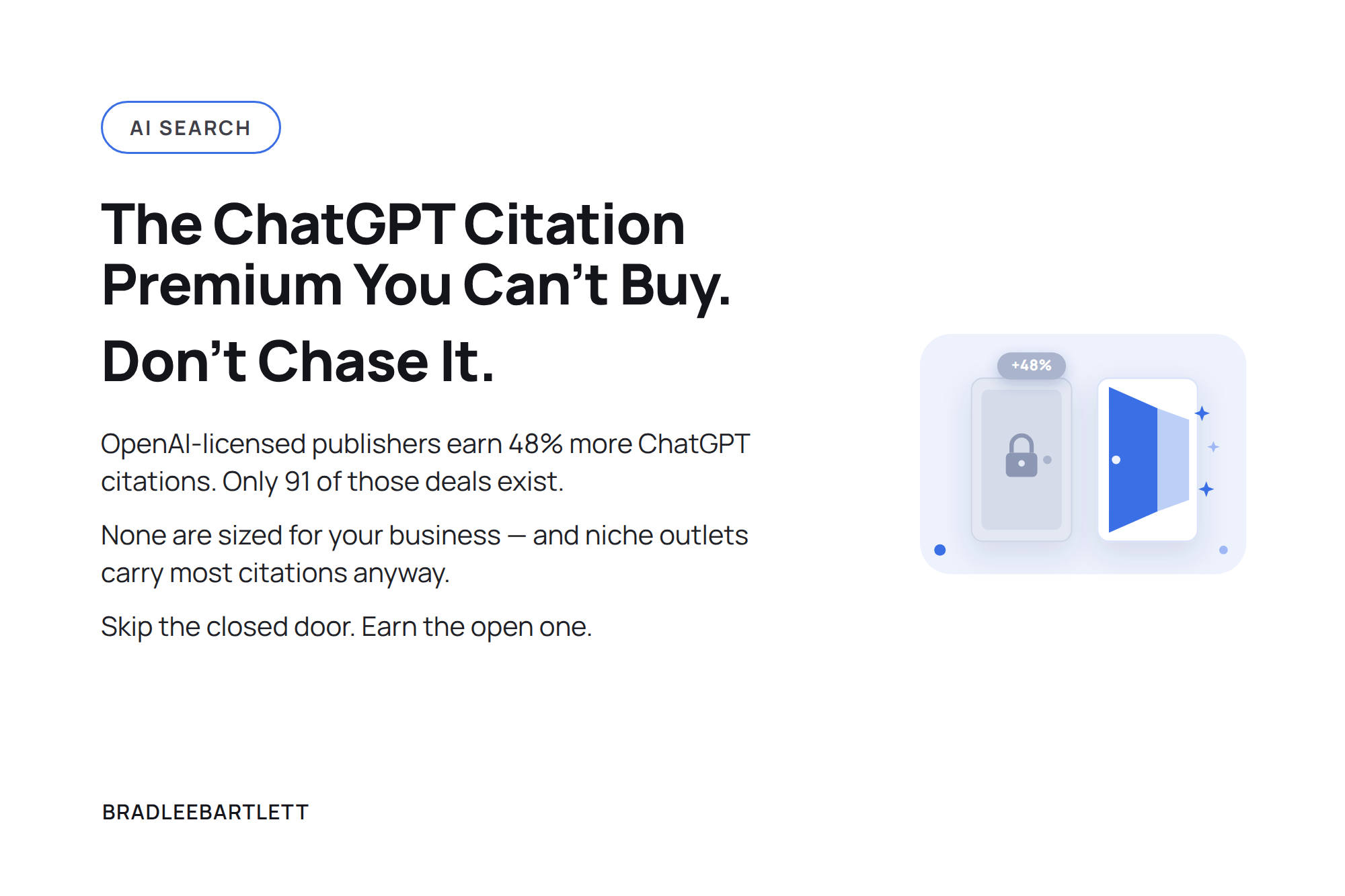
Three clients sent me the same headline this week: publishers with an OpenAI licensing deal are getting cited on ChatGPT 48% more than everyone else.Here's what that study proves, why most of us can't chase the lever anyway.
Reddit's visible share of ChatGPT Search citations just fell 86% — with no confirmed cause. Here's why the real lesson isn't about Reddit at all.
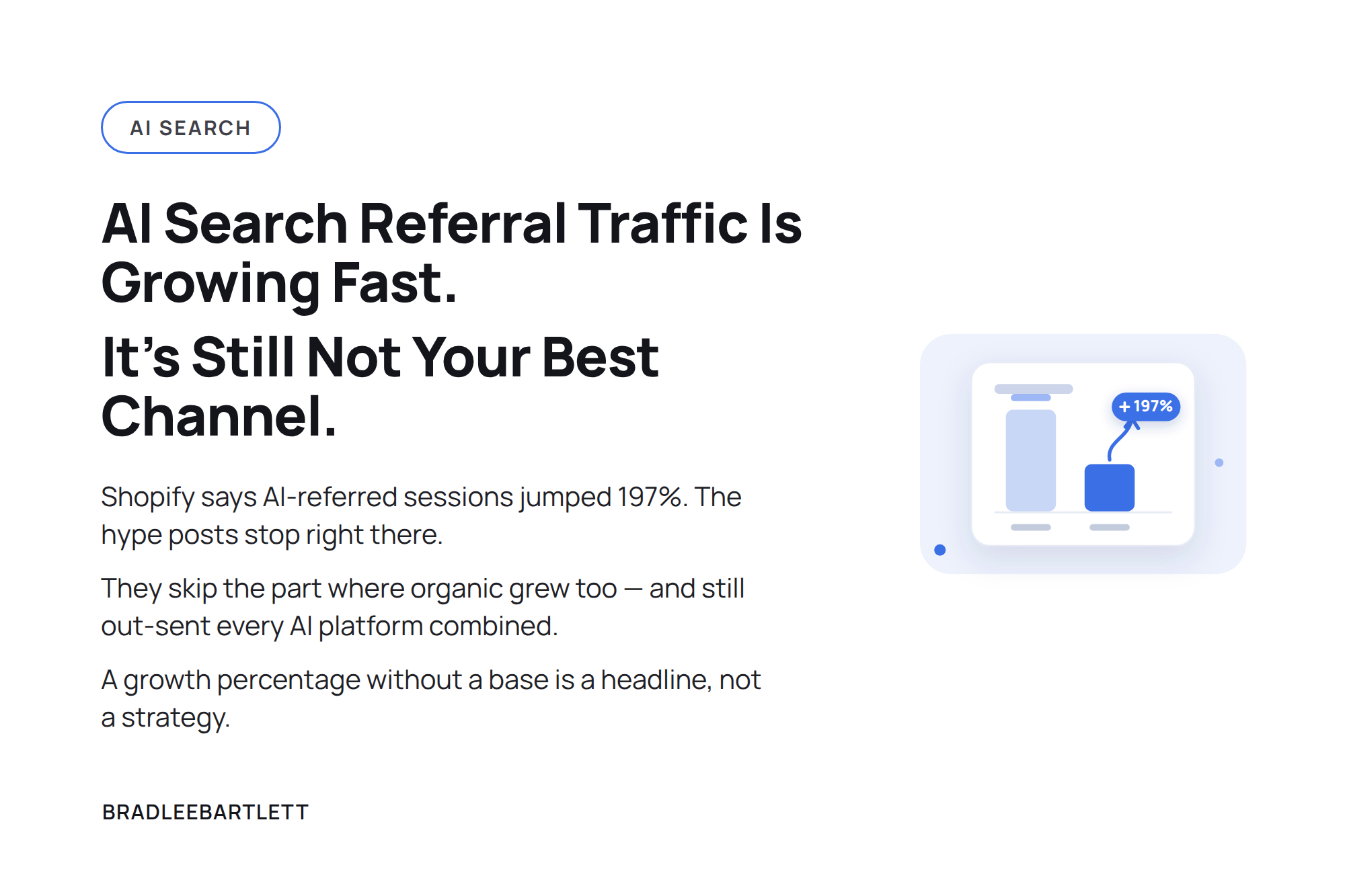
AI referral traffic is up 197% year-over-year, according to Shopify's fresh Q2 data. Organic search grew too — 12% — and still sends more total traffic than every AI platform combined. Here's what’s worth trusting, and the check for whether it should change what you're doing.
Google just shipped a feature that proves timeliness is a citation signal in AI Overviews — embedding live Top Stories directly inside AI-generated answers instead of a static synthesized paragraph. Here's what that means for a B2B content calendar.
Google's AI Overview spent part of this week telling people that surveillance cameras contain gold and copper worth hundreds of dollars. They don't. Here's what the sourcing failure behind it means for any team that drafts content with AI and hasn't named who's accountable for checking it.
Google gave site owners a switch to disappear from AI Overviews. Don't flip it. Here's why opting out costs you the citation — and the three GEO tweaks that get AI to cite you instead.
Google rebuilt the search box as an AI agent. Here's what agentic search does to your traffic — and the 90-day plan to stay cited.
AI Overviews are intercepting your clients' clicks — even when they're ranking first. Here's the 5-shift playbook agencies need to start building for citations, not just positions.
BBC and The Verge ran AI-search-doom headlines this week. The diagnosis is right, but the prescription is incomplete. Here's the practitioner read and a 90-day fix.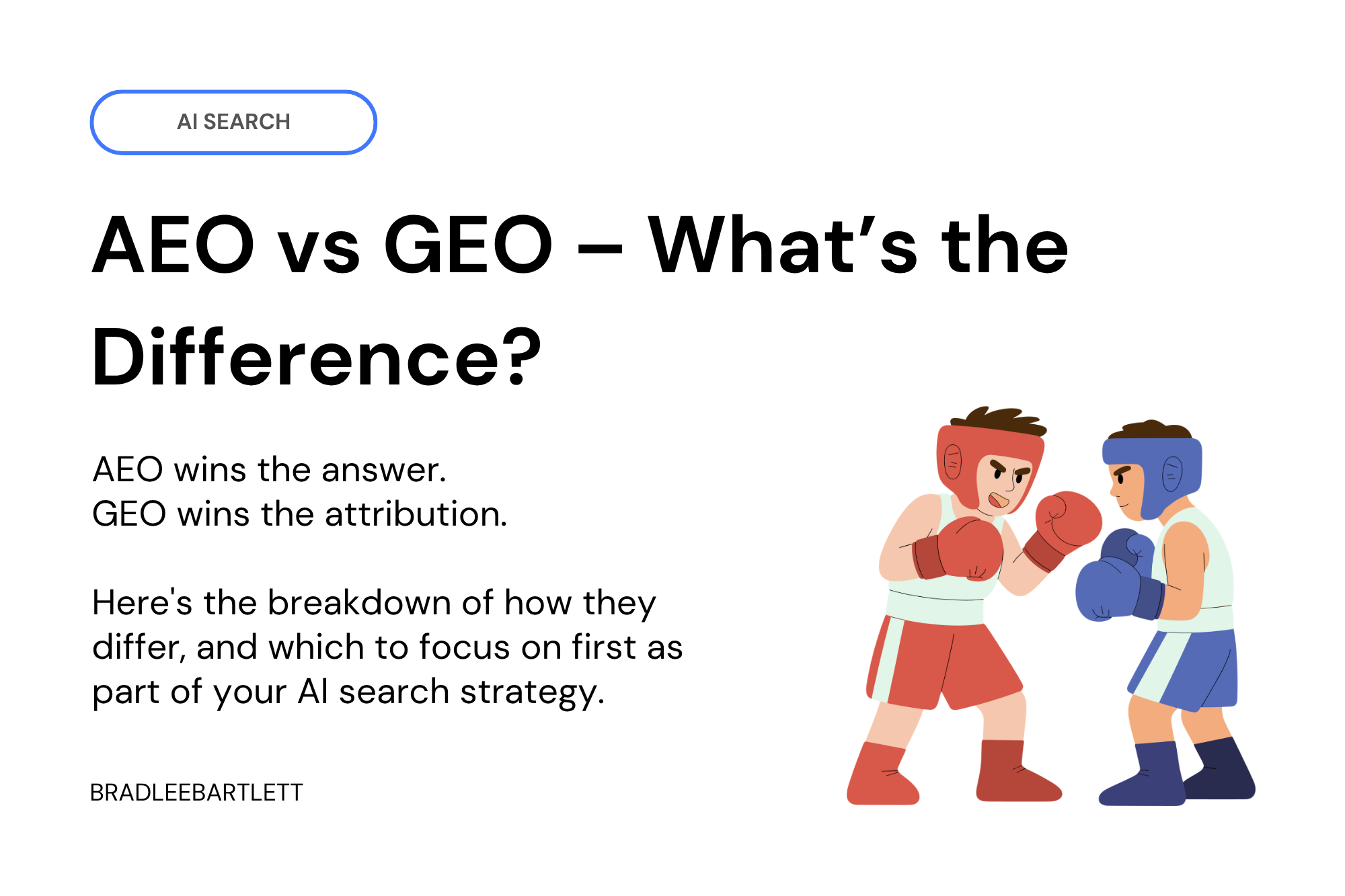
AEO and GEO aren't competing strategies — they're two different layers of the same problem. Here's how to tell them apart, sequence them right, and stop leaving AI search visibility on the table.Most businesses don't have an AI content problem. They have a strategy problem — and they're using AI to scale it. Here's how to fix the order of operations.
Your Google Analytics dashboard wasn't built to track AI citations. Here are the 8 GEO metrics that tell you whether AI systems are noticing, citing, and trusting your brand.
Google's March 2026 Core Update completed April 8 after 12 days. Three signals got re-weighted: Information Gain, verified authorship, and topical depth. Here's what changed, who got hit, and what to do now.
Being cited by AI tools like ChatGPT and Google AI Overviews rarely translates into a flood of direct traffic — at least not yet. But the brands showing up in AI answers are building something more durable: trust and authority at the exact moment a buyer forms an opinion. Here's what the data says.
New data from a 1,161-citation study reveals a 7x gap between ChatGPT's free and premium tiers. GPT-5.4 cites brand websites 56% of the time. GPT-5.3 cites them just 8%. Here's why most brands are optimizing for the wrong model — and what to do about it.
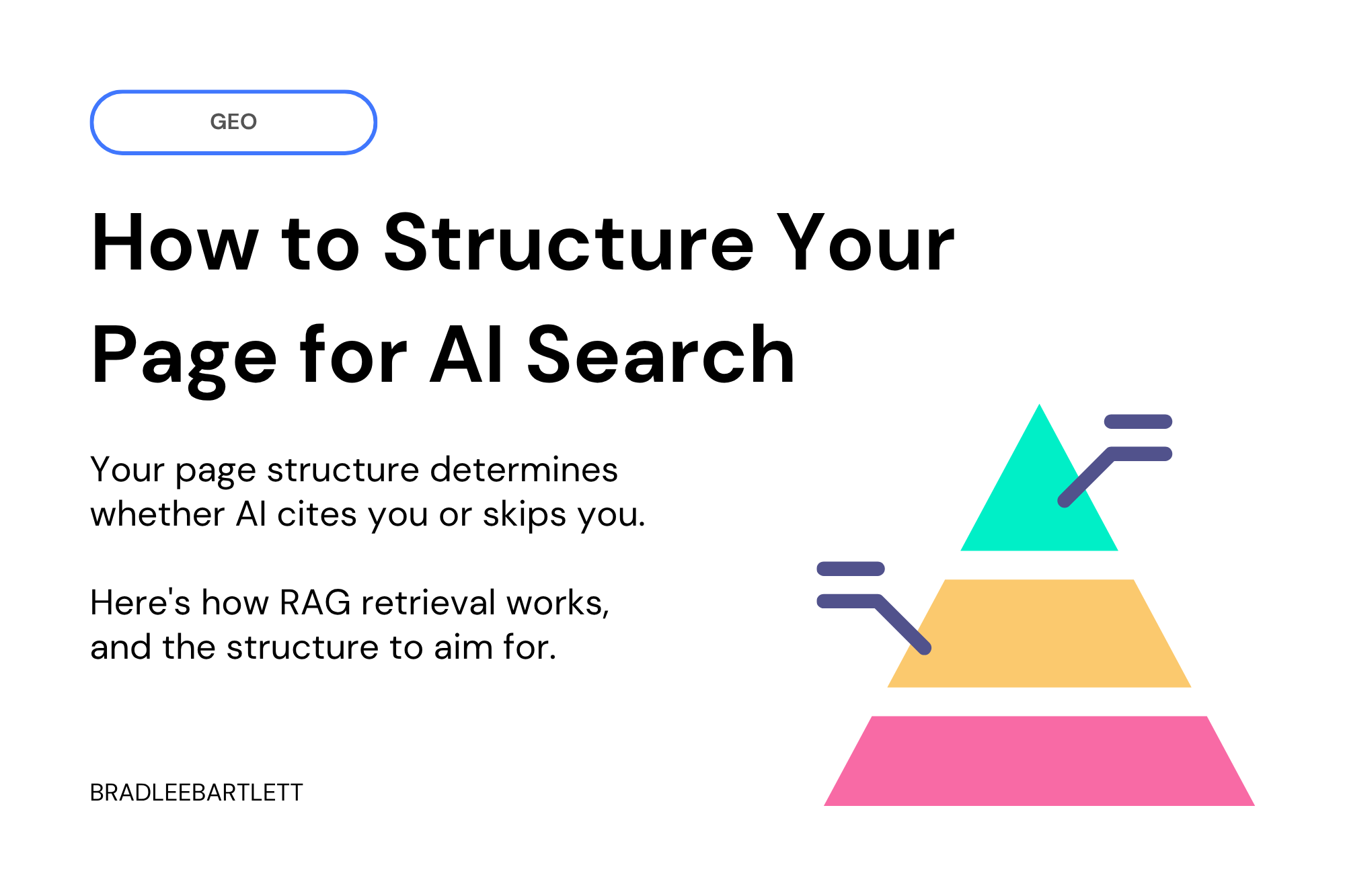
AI tools don't read your page, they retrieve passages from it. Here's what that means for how you write and format every section, heading, and block of copy you publish.
Listicles account for 35.6% of all AI citations. But the reason why reveals the mechanical logic behind how AI systems decide what's safe to cite. Here's what the data shows, and how to apply it to whatever you write.
Your next customer may choose you without ever visiting your website. AI answer engines triangulate across the entire web to decide whether your brand is credible enough to recommend. Here's what that means — and how to get cited.