How to Measure Your GEO Performance (8 Metrics to Track)
Your Google Analytics dashboard wasn't built to track AI citations. Here are the 8 GEO metrics that tell you whether AI systems are noticing, citing, and trusting your brand.
What Did the Google March 2026 Core Update Change?
Google's March 2026 Core Update completed April 8 after 12 days. Three signals got re-weighted: Information Gain, verified authorship, and topical depth. Here's what changed, who got hit, and what to do now.
How to Build Off-Site Brand Signals That AI Uses to Cites You
Getting cited by AI includes what the rest of the web says about you. AI systems build their understanding of brands from reviews, Reddit threads, LinkedIn posts, and industry mentions. If your brand is invisible off-site, AI treats it as unvalidated. Here's how to change that.
Does Being Cited by AI Drive Traffic? What the Data Says in 2026
Being cited by AI tools like ChatGPT and Google AI Overviews rarely translates into a flood of direct traffic — at least not yet. But the brands showing up in AI answers are building something more durable: trust and authority at the exact moment a buyer forms an opinion. Here's what the data says.
Your Brand Voice Is Now an AI Search Signal - Are You Being Heard?
AI doesn't cite the best content — it cites the most recognizable content. If your brand voice guide was built for human writers, it's probably invisible to the systems that now control discovery. Here's how to fix that.
How Do I Know if AI Search is Sending People to My Website?
Most brands have no idea whether AI search is driving traffic to their site. Here's a practical three-step system — manual visibility check, GA4 setup, and a monthly cadence — that tells you exactly where you stand. No expensive tools required.
GPT-5.4 Changed Who Gets Cited in ChatGPT — And Most Brands Are Optimizing for the Wrong Model
New data from a 1,161-citation study reveals a 7x gap between ChatGPT's free and premium tiers. GPT-5.4 cites brand websites 56% of the time. GPT-5.3 cites them just 8%. Here's why most brands are optimizing for the wrong model — and what to do about it.
What Should I Include in My Content to Get Cited by AI?
AI tools don't cite the best content. They cite the most extractable content. Here's what that actually means — and the six elements that give every page the strongest chance of showing up in ChatGPT, Perplexity, and Google AI Overviews.
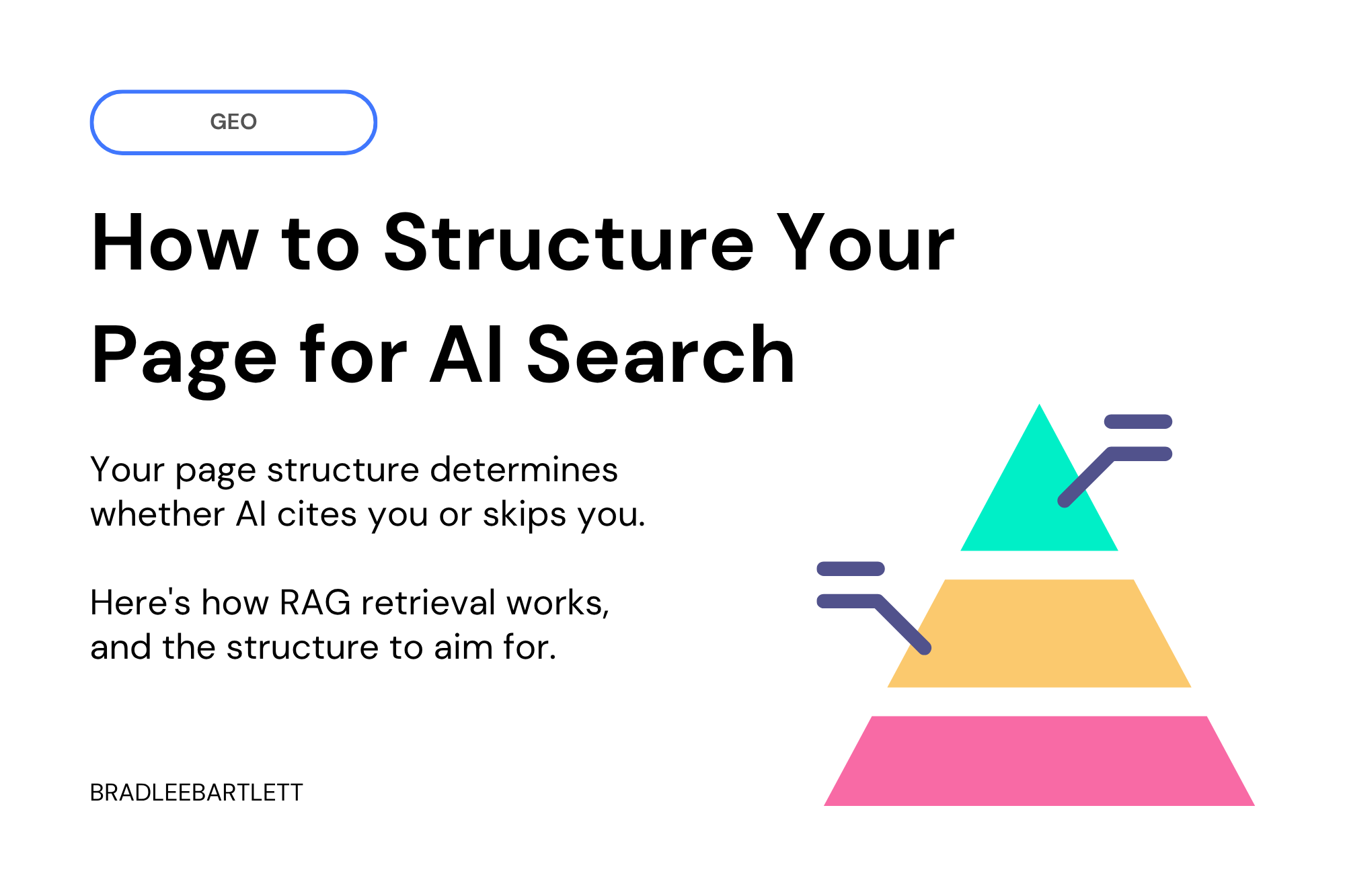
How to Structure a Page So AI Tools Can Extract and Cite It
AI tools don't read your page, they retrieve passages from it. Here's what that means for how you write and format every section, heading, and block of copy you publish.
What Content Formats Get Cited Most Often by AI?
Listicles account for 35.6% of all AI citations. But the reason why reveals the mechanical logic behind how AI systems decide what's safe to cite. Here's what the data shows, and how to apply it to whatever you write.
What Brand Signals Get You Cited in AI Answers?
Your next customer may choose you without ever visiting your website. AI answer engines triangulate across the entire web to decide whether your brand is credible enough to recommend. Here's what that means — and how to get cited.
Is Profound Worth It for GEO? Honest Review + Alternatives
GEO tools like Profound are excellent at measuring where you stand in AI-generated answers — but they don't close the visibility gap on their own. Here's an honest look at what these platforms actually do, who they're built for, and what no dashboard can do for you.
How to Restructure a Blog for AI Search
Your blog isn't invisible to AI because the writing is bad. It's invisible because the structure is broken. Here's my step-by-step blog teardown — from content inventory to pillar map to internal linking — to get your blog ready for AI search.
What Was The March 2026 Google Spam Update?
Google's March 2026 spam update was one of the fastest on record — and it's a signal worth paying attention to. Here's what changed, what's at risk, and a quick audit checklist if you think your site was affected.
What is Brand Voice?
AI content tools are the default now — and something is quietly happening to brand voices everywhere. They're converging. Here's why it happens, what's actually at risk, and what protecting your voice requires in practice.
How to Audit Your Existing Content for AI Citability
Most content teams don't have a GEO gap because they published bad content. They have one because good SEO content and citable AI content are two different standards. Here's the audit process that closes the gap.
How to Write Content That Gets Cited by AI Systems
Structure gets your content found. Writing is what gets it cited. Here's the craft layer most GEO guides skip.
No GEO Without SEO — Foundations Non-SEOs Can't Skip
GEO doesn't replace SEO. It builds on top of it. If your pages aren't crawlable, your structure isn't clear, and your content isn't authoritative, AI systems can't cite you — regardless of how well you've optimized for generative answers. Here's what needs to be in place first.
How Do You Turn an Existing Blog Library into GEO-Friendly Topic Clusters?
Most businesses don't need to build a GEO content cluster from scratch. The raw material is already in your blog library — it just needs structure, smarter linking, and a few targeted upgrades to become something AI systems can actually navigate. Here's the six-step process.
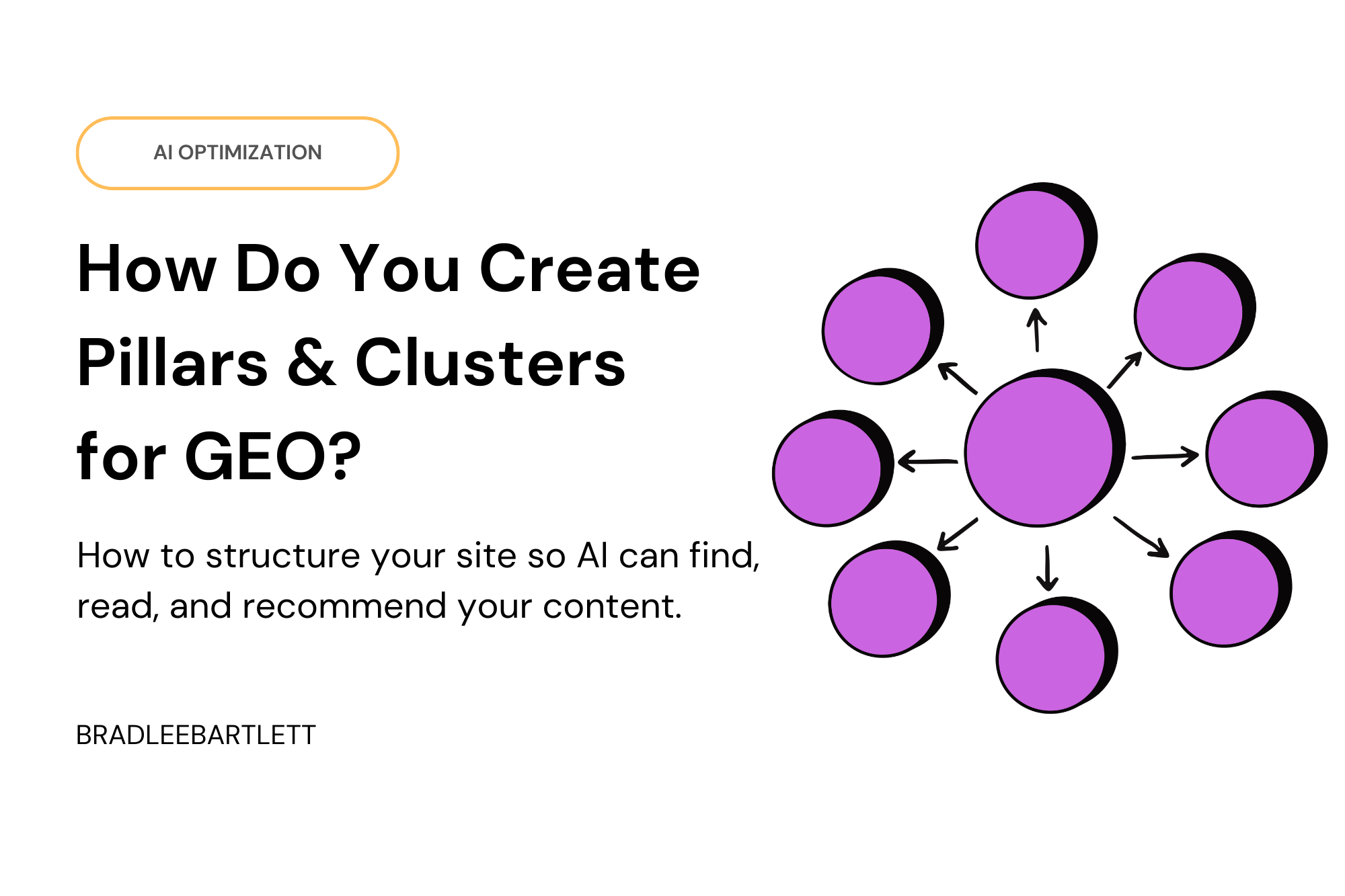
How Do You Create Pillar Pages and Topic Clusters for GEO?
Most content strategies are built for Google. But AI systems don't rank pages — they cite sources. Here's how to structure your site so ChatGPT, Perplexity, and Google AI Overviews can actually find, read, and recommend you.